Athens, like many Mediterranean capitals, faces an increasingly urgent challenge: extreme urban heat, frequent heatwaves and periodic floods. These climate impacts don’t happen in isolation. They are intensified by decades of traditional urban development that buried water systems, replaced porous surfaces with concrete and asphalt, and left public spaces devoid of blue and green infrastructure.
In response, a bold European initiative is transforming how the city adapts to a hotter future: Cooling Havens: Water-Powered Neighbourhood Cooling and Engagement Stations. This innovative project introduces water-sensitive urban design, green infrastructure and citizen engagement into the city’s core not j,ust to cool the air, but to reshape how Athenians live, learn and care for their environment.
Why Athens Needs Cooling Havens
Athens consistently ranks among Europe’s most heat-vulnerable cities. Its built environment, where more than 80 % of surfaces are impermeable, traps thermal energy, creating intense urban heat islands. Historic rivers once providing natural cooling are now buried beneath infrastructure, removing essential elements of the natural water cycle.
The consequences are tangible: heatwaves with temperatures above 40 °C, limited natural cooling from vegetation and water, and fragmented short-term mitigation measures that leave vulnerable communities without adequate relief.
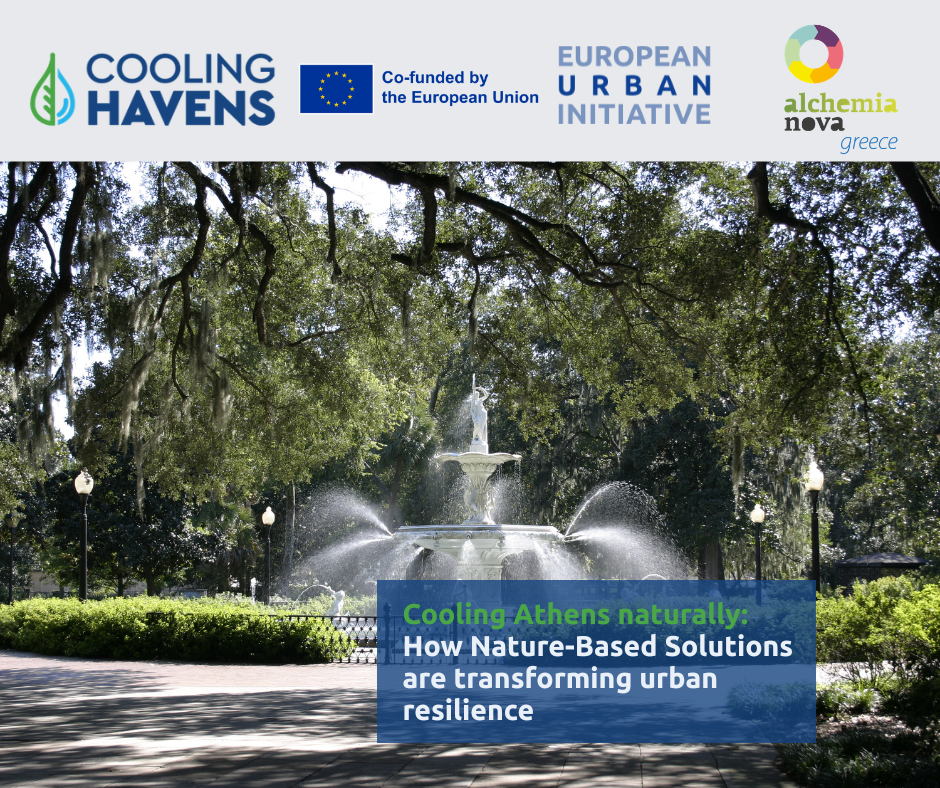
Cooling Havens tackles these challenges head-on by bringing water and green back into the urban fabric as functional elements of everyday public space and climate resilience.
What Makes Cooling Havens Innovative
1. A Network of Blue-Green Cooling Points
Across Athens, the project will create six permanent Cooling Points, combining rainwater gardens, bioswale wetlands, and water recovery systems. These features work synergistically to:
- reduce local temperatures by approximately 2–5 °C during heatwaves
- retain more than 70 % of intense rainfall for later use
- Restore ecological functions that were long absent from the urban environment
2. Water Recycling and Sewer Mining
One of the project’s standout innovations is the use of sewer-mining technology to reclaim wastewater for irrigation and water features. This technology operates as a proof of concept for sustainable water reuse in dense urban contexts, transforming wastewater from an under-utilised resource into a cooling and biodiversity-supporting asset.
3. Smart Monitoring and Data Transparency
Each Cooling Point is embedded with IoT sensors that continuously track temperature, humidity, water use and air quality. These sensors feed into an Open Data portal, enabling both policymakers and citizens to visualise real-time environmental data and make informed decisions. Advanced analytics and AI optimisation help manage water and energy flows efficiently.
4. Community Co-design and Participation
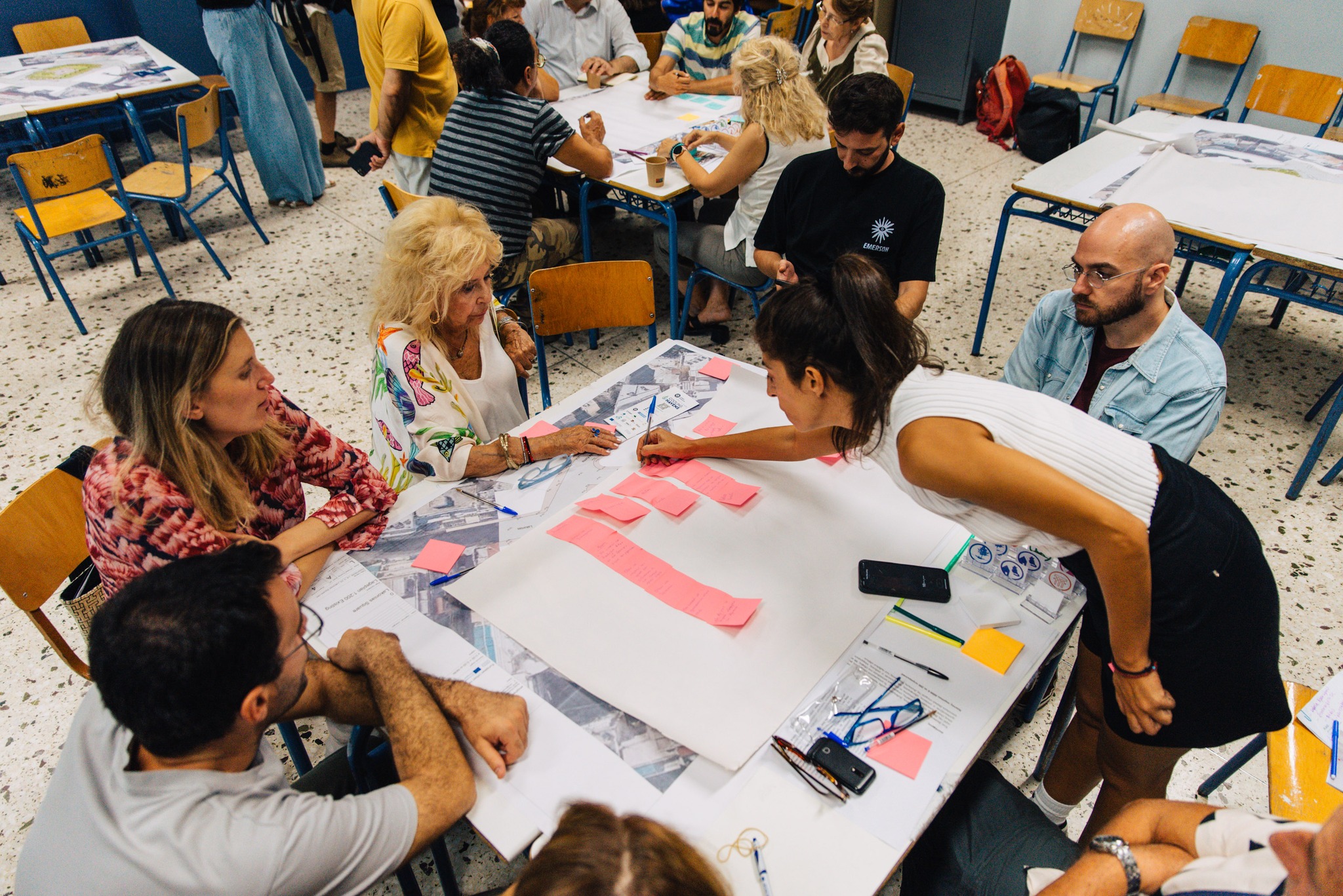
Cooling Havens integrates residents at every step, not only as beneficiaries, but as co-creators of solutions. Through participatory workshops in every neighbourhood, the project invites locals to help shape designs, share needs and priorities, and cultivate a shared sense of ownership. Over 4,000 citizens are expected to participate directly, making this one of the most participatory climate resilience projects in Europe.
5. Education and Cultural Engagement
The project fosters a new water culture by offering:
- The Athens Water School with educational pathways for students and residents
- The Digital Water Memory Lab with storytelling workshops and data experiences
- Public art and narrative projects that explore water’s role in local heritage.
These activities go beyond awareness. They build long-lasting connections between people, water and places.
Conclusion: Water, Community, and Urban Resilience
Cooling Havens reimagines urban life where water, greenery and people coexist in ways that reduce heat, manage water sustainably, and strengthen civic engagement. It transforms neglected public spaces into cool havens of comfort, resilience and learning, while planting seeds for a culture of responsible water use.
As extreme heat and climate impacts intensify, projects like Cooling Havens demonstrate that smart design, community collaboration and nature-based innovation are not optional, they are essential for the future of resilient cities.
Find more information about the project here.